How do you pick strikes for cash-secured puts?
Systematic put sellers select strikes by delta, not by price: a strike’s delta approximates the market-implied probability it finishes in the money. Conservative income sellers concentrate around 0.05–0.15 delta (roughly 85–95% implied probability of expiring worthless); more aggressive sellers go to 0.20–0.30 for meaningfully higher premium. The tradeoff is mechanical — premium compensates for assignment risk, so there is no delta that pays well and assigns rarely. What separates strong strike selection from screener-following is context the delta doesn’t contain: where support actually sits, how rich the volatility being sold is, and what the market regime does to the tails.
Is 1% per week from selling puts realistic?
A target you’ll see constantly in options-selling communities is ~1% per week of deployed capital, usually via low-delta weekly puts on volatile names. The arithmetic works in calm and rising markets — that’s why the journals showing 20–40% annualized runs exist. The caveats the journals reveal on closer reading: the premium yield on offer at a given delta scales with the underlying’s volatility, so consistent 1%/week at low delta forces you into high-IV names; drawdowns and assignment losses run through those track records (a representative public journal shows healthy total premium alongside meaningful open drawdown and assignment losses); and the strategy’s return distribution is many small wins against occasional large losses. One percent a week is a volatility harvest, not an interest rate — it’s paid for bearing crash risk in volatile stocks.
What does dealer positioning add to strike selection?
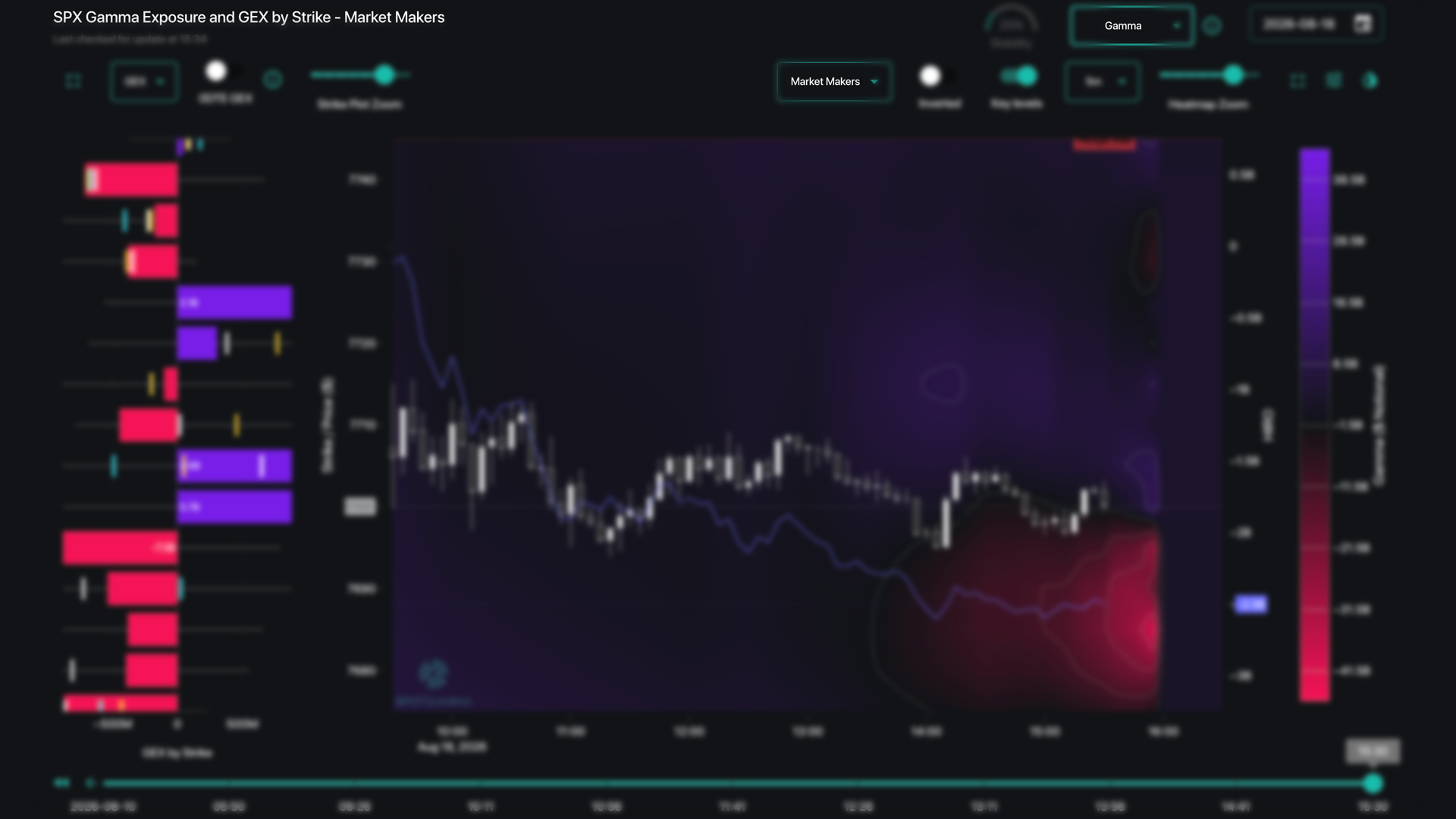
Delta tells you the option market’s probability; positioning tells you where the mechanical flows are. Strikes carrying the largest put-gamma concentrations — the put wall — tend to behave as support, because dealers hedging those options buy as price falls toward the strike. For a put seller, that means two practical checks before selling a strike: Is my strike at or below a major support level in the positioning data (structural cushion), or is it sitting alone in empty air below the wall? And is the market in positive gamma (dealer hedging dampens moves — friendly to premium sellers) or negative gamma (hedging amplifies moves — the regime where “safe” 0.10-delta strikes get run over)? SpotGamma’s positioning data, including SGOI’s estimates of how market makers and buyside are actually positioned per stock, exists to answer exactly these questions.
Should you sell puts through earnings?
Earnings weeks offer the fattest premiums — deliberately. The options market prices an implied move for the event, and selling a put ahead of earnings means underwriting that binary gap. Sellers who do it systematically compare the options-implied move against the stock’s historical earnings moves and only sell when implied is rich; sellers who avoid it point out that a single 25% gap through your strike erases months of premium. Either way, know the implied move before you sell the week of a report — an “earnings calendar by implied move” is one of the most-shared research formats in these communities for a reason. Related: what IV crush does to option prices after the event.
When should you roll instead of taking assignment?
The standing rule among experienced sellers: roll only for a net credit, and only when you still want the position. Rolling down and out (lower strike, later expiry) for credit reduces risk while keeping the trade alive; rolling for a debit to avoid admitting a loss converts a defined decision into an open-ended one. If a credit roll isn’t available and you don’t want the shares, taking the loss is a position decision, not a moral failure. If you do want the shares, assignment is just the wheel turning — see the wheel strategy explained.
The strike-selection checklist
- Delta band: chosen deliberately (0.05–0.15 conservative, 0.20–0.30 aggressive), not chased for yield.
- Support check: strike at/below major positioning support (put wall), not stranded below it.
- Vol check: is the IV you’re selling rich or thin for this name? Premium yield without IV context is a trap.
- Regime check: positive gamma favors sellers; negative gamma widens tails.
- Event check: know the implied move before selling into earnings week.
- Size check: assignment on this strike should be an acceptable outcome, not a portfolio event.
Last updated: August 2026 — Published by SpotGamma. Model any position with the free options profit calculator.