Is selling options profitable?
Yes — on average, and for a documented reason: the variance risk premium. Options tend to trade at implied volatilities slightly above the volatility that subsequently occurs, because buyers pay up for protection and convexity. Sellers systematically harvest that gap, which is why disciplined premium-selling shows positive expectancy across long samples. The honest completion of that sentence: the premium exists because sellers occasionally absorb large, fast losses. Selling options is profitable the way insurance underwriting is profitable — most policies are pure profit, and hurricanes are real.
If it works, why doesn’t every professional just sell options?
This question appears in options-selling communities almost weekly, and it deserves a real answer rather than a shrug. First: professionals do sell volatility, at enormous scale — put-write funds, covered-call ETFs (a category now holding tens of billions of dollars), volatility risk premium strategies at pension funds and hedge funds. The strategy is thoroughly institutionalized. Second, institutions that sell premium do it with constraints retail journals rarely show: strict tail hedging, position limits, and mandates that survive a 2008 or a March 2020. Third, the strategy’s return profile — steady small gains, rare deep losses — is exactly the shape that looks brilliant right up until the sample includes a crash. A 30% annualized run over 18 calm months is not evidence the tail risk is gone; it’s evidence it hasn’t been sampled yet. Professionals size for the tail; that sizing is why their headline returns look less exciting than a leveraged retail wheel journal.
When does selling premium fail?
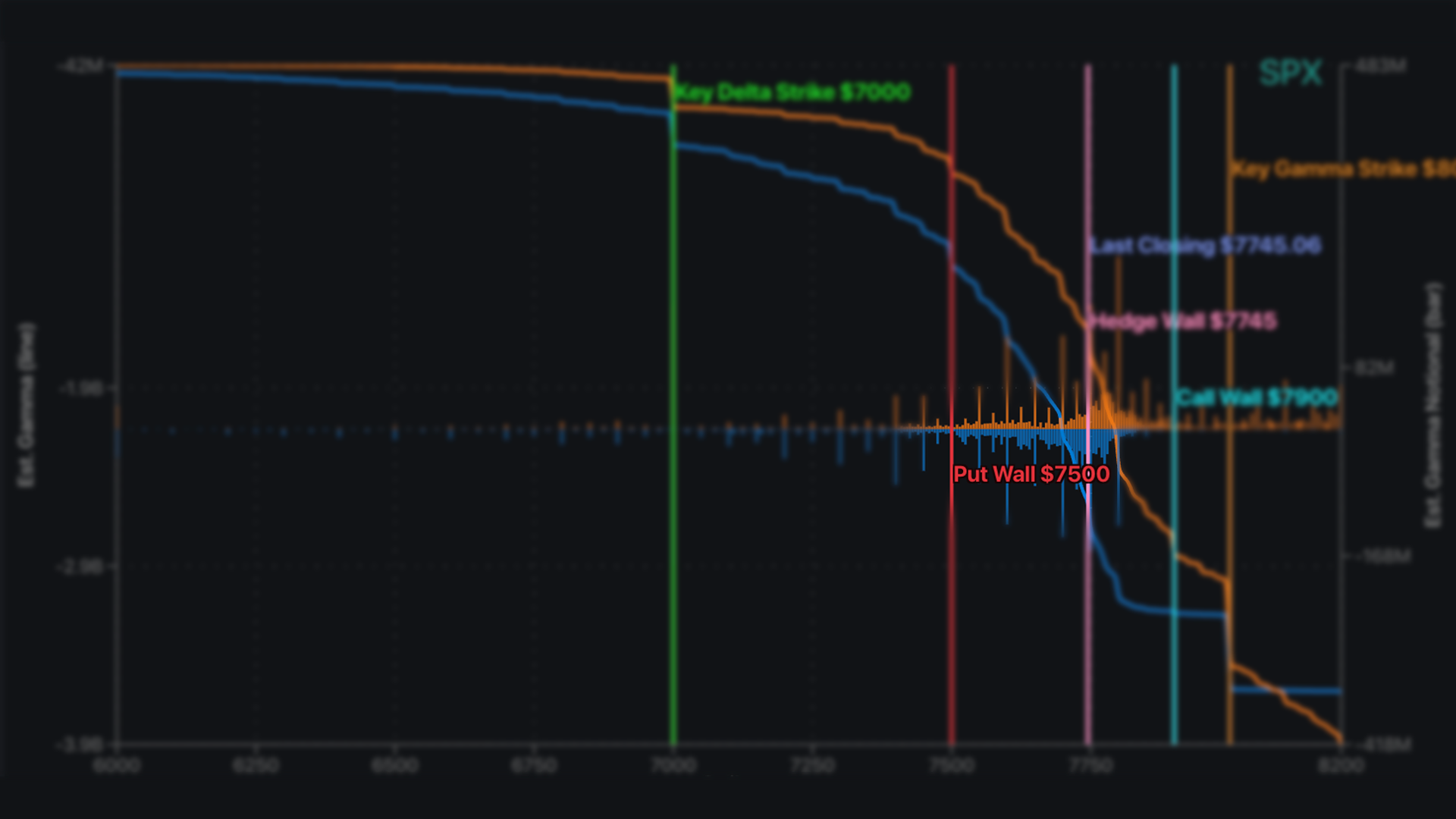
Three conditions, and they cluster: volatility spikes (short options lose mark-to-market value violently as IV rises, even before strikes are breached); gap moves (a stock jumping through your strike overnight skips every adjustment you planned to make); and negative gamma regimes — the market state where dealers’ own hedging amplifies price moves instead of dampening them. That last one is the structural tell most premium sellers never look at: in negative gamma conditions, selloffs accelerate mechanically, correlations rise, and the puts you sold at “safe” strikes get tested fast. The same positioning data that flags the regime also shows where the crowd is short puts — which is precisely where forced hedging and covering concentrate when the tape breaks.
What returns are realistic for an options seller?
Public multi-year track records from disciplined retail sellers tend to cluster in the high single digits to low twenties annualized, depending on delta, leverage, and the sample’s crash count — with the widely-shared “1% a week” targets sitting at the aggressive end and depending on high-IV underlyings. Benchmarks help calibrate: the CBOE PutWrite index (systematic monthly at-the-money put selling on the S&P 500) has historically delivered equity-like returns with lower volatility — attractive, but not the triple-digit compounding that screenshots suggest. Anyone quoting returns without quoting their worst drawdown is describing half a distribution.
How do sellers stack the odds?
- Sell rich volatility, not just any volatility — premium yield only matters relative to the risk being underwritten; IV context per name is the seller’s edge.
- Respect the regime — positive gamma markets pin and mean-revert (seller-friendly); negative gamma markets trend and gap. Adjust size, not just strikes.
- Use positioning-aware strikes — strikes behind major support in the dealer-positioning data (put walls) rather than bare delta screens.
- Know the event calendar — implied moves around earnings, OpEx cycles that change pinning behavior, and IV crush mechanics.
- Size as if the tail arrives this year — because across a multi-year strategy, it does.
Last updated: August 2026 — Published by SpotGamma. SpotGamma’s positioning data (SGOI) and real-time hedging flow (HIRO) show the dealer mechanics that determine which regime you’re selling premium into.