Oracle (ORCL) is attracting notable insider buying as investors weigh the company’s rapid AI-driven cloud growth against concerns over its massive infrastructure spending.
On September 29, Oracle director Stephen Rusckowski purchased 25,000 shares at an average price of $139.35, totaling approximately $3.48 million, according to an SEC Form 4 filed October 1. However, other Oracle insiders have been net sellers recently, creating a more mixed picture of insider sentiment despite Rusckowski’s sizable vote of confidence.
The purchase comes as Oracle shares remain under pressure despite strong demand for AI infrastructure. While the insider activity suggests confidence in the company’s long-term outlook, options-market positioning tells a more cautious story.
While AI leaders like Nvidia have rallied in 2026, Oracle has notably lagged, with shares down nearly 30% year-to-date. Concerns over the company’s massive AI infrastructure spending have weighed on sentiment, making the recent $3.5 million insider purchase particularly noteworthy.
1. Insider Buying: A $3.5 Million Vote of Confidence
Rusckowski, the former CEO of Quest Diagnostics, joined Oracle’s board in November 2025. His September transaction represents his first reported open-market purchase since joining the company.

The shares were acquired through his living trust, making this a notable open-market transaction rather than a routine stock compensation award.
Previous director purchases occurred in 2025, but Rusckowski’s $3.48 million investment stands out for its size and timing.
Although insider buying does not guarantee a bottom, significant purchases can signal confidence in a company’s long-term prospects, particularly during periods of investor uncertainty.
2. Options Market: What Is Positioning Telling Us?
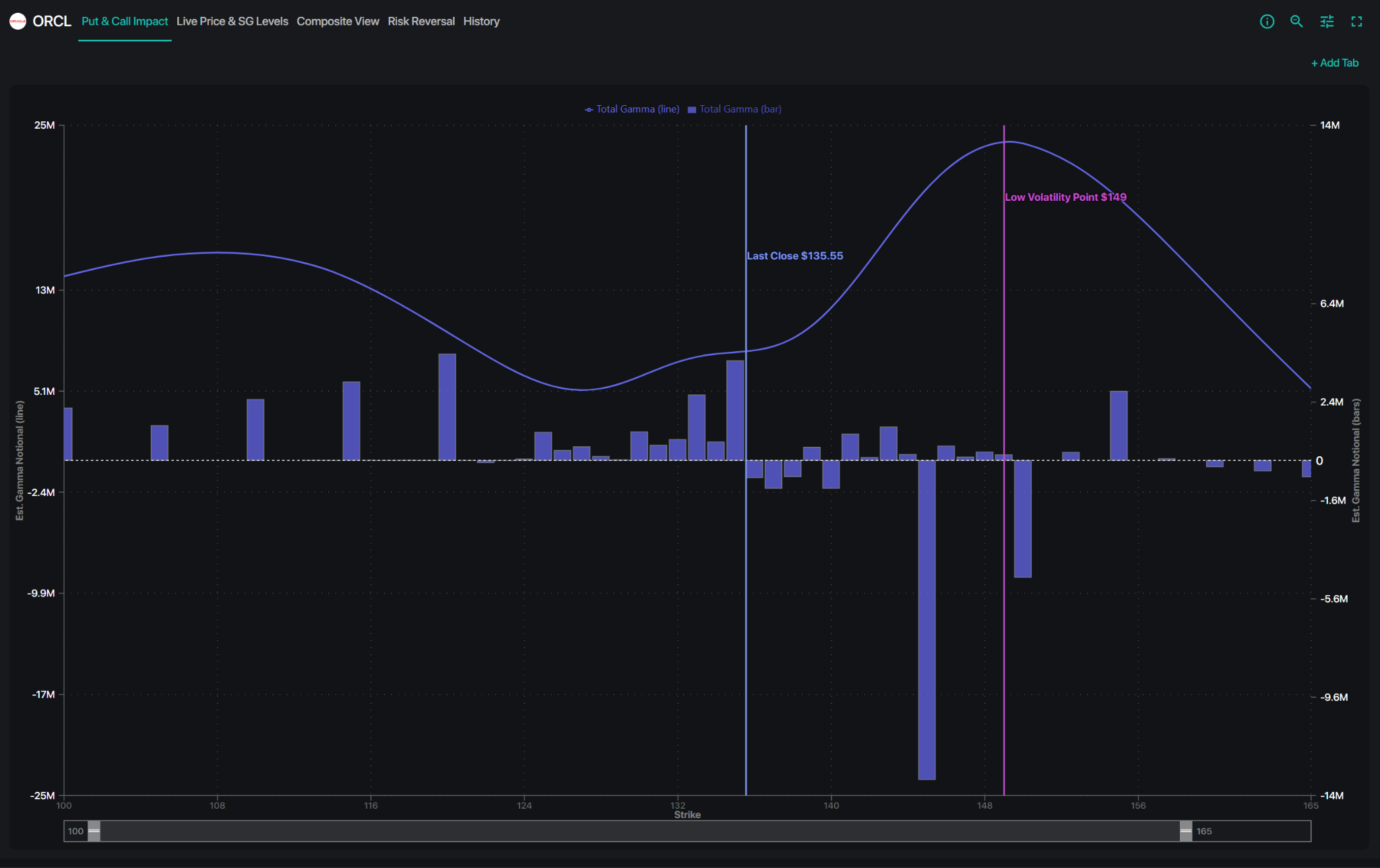
Despite the recent insider purchase, Oracle’s options market continues to reflect uncertainty over the stock’s near-term direction.
SpotGamma’s Synthetic OI chart highlights $149 as a Low Volatility Point, where the model’s aggregate gamma profile suggests price fluctuations could become more contained if Oracle shares recover toward that level.
However, notable negative gamma exposure at the $145 and $150 strikes could contribute to more volatile price behavior around those areas. This makes the $145–$150 region an important zone to monitor rather than a guaranteed upside target.
Meanwhile, Rusckowski’s $139.35 purchase price provides a useful sentiment reference as traders evaluate whether Oracle can establish a sustainable recovery.
Downside Protection Remains Expensive
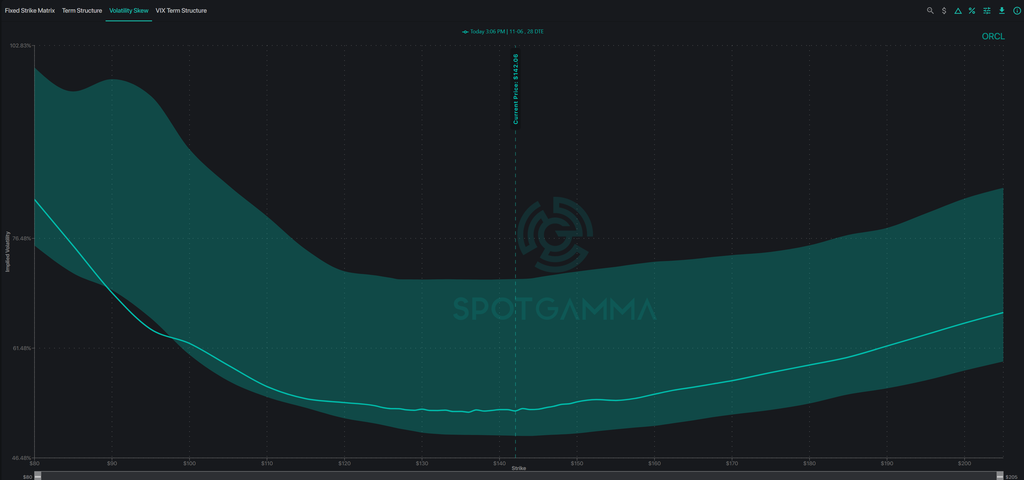
SpotGamma’s November 6 expiration volatility skew shows substantially higher implied volatility at lower put strikes compared with at-the-money options.
This steep downside skew indicates that the options market assigns a greater volatility premium to downside exposure, reflecting continued concern about potential declines.
The contrast is notable: while an Oracle director is committing millions of dollars to shares, downside protection remains relatively expensive.
A recovery in share prices accompanied by a flattening of downside skew could suggest that market concerns are beginning to ease, although neither signal alone would confirm a sustainable bottom.
3. Fundamentals: AI Growth Comes at a Cost
Oracle’s latest earnings highlighted impressive growth across its cloud infrastructure business.
In its fiscal first-quarter 2027 results, the company reported:
- Revenue: $19.3 billion, up 30% year over year.
- Cloud infrastructure revenue: $7.4 billion, up 121%.
- Remaining performance obligations: $664 billion, highlighting a substantial backlog of contracted business.
However, that growth comes with considerable spending requirements.
Oracle reported approximately $28.5 billion in quarterly capital expenditures and negative free cash flow of $5.4 billion, reflecting the enormous investment required to expand AI data center capacity.
The central question for investors is whether Oracle can convert its rapidly expanding backlog into profitable revenue quickly enough to justify its spending and financing requirements.
Rusckowski’s purchase suggests confidence in that longer-term opportunity, even as Wall Street remains concerned about execution and cash generation.
The Takeaway
Oracle’s $3.48 million insider purchase is a noteworthy vote of confidence as investors question the company’s aggressive AI infrastructure spending.
However, elevated downside volatility skew suggests traders are still pricing meaningful risk rather than an all-clear signal.
For traders, the $139-$140 purchase area remains an important reference, while a sustained move toward $147-$149 could strengthen the recovery setup.
The insider purchase doesn’t confirm a bottom, but improving price action alongside easing downside skew would make the bullish case more compelling.