Vol Sellers Forced to Cover as VIX Breaks 20
On Friday, the market’s calm broke heading into the October monthly options expiration. The S&P 500 dropped over 1% on the day while the VIX jumped to close at 20 — the highest level in nearly three months.
Options traders spent Friday scrambling for protection, marking a sharp reversal from the prevailing dip-buying observed this past summer.
From our Volatility Dashboard, we see that SPX put skew rose significantly, while call skew faded compared with the 30-day range. In other words, demand for puts spiked while traders hit the brakes on call-buying.
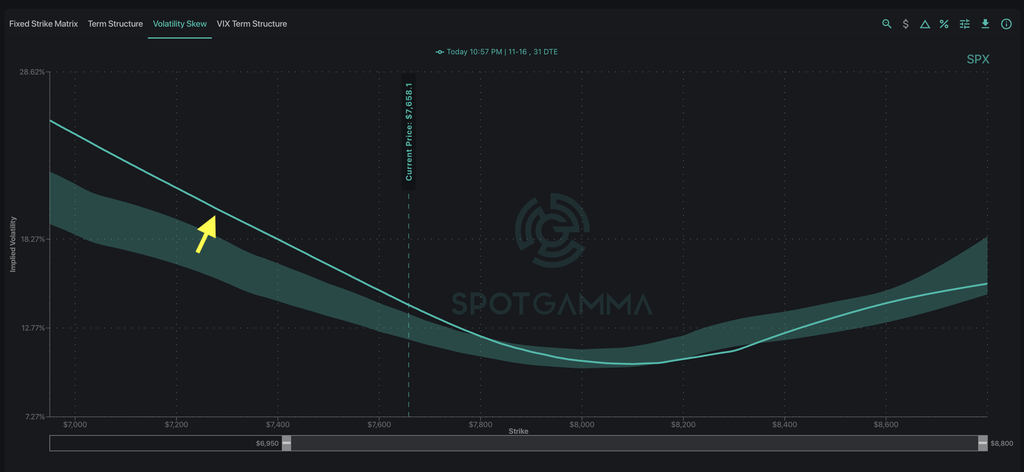
Pressure had been building last week following the hotter-than-expected CPI and PPI prints, and both events further extended the AI trade unwind. We warned about “vol jump risk” due to extreme low volatility in our pre-market Founder’s Note on Tuesday, October 13:
“The market does have a problem: a complete lack of volatility being priced in. We want to be long of Nov options here as we think realized vol is poised to once again wake up – just as it did out of Sep OPEX.”
As a result, when volatility jumped surrounding CPI and OPEX on Wednesday and Friday respectively, we noticed that index vol sellers were forced to cover their position. This worked as a feedback loop to fuel index implied volatility much higher.
Moreover, we shared repeatedly last week that a break below our Risk Pivot at 7,690 would push the SPX into negative gamma territory. In that zone, dealers tend to hedge by selling into weakness, which can amplify market selloffs. Friday’s price action was consistent with that dynamic.
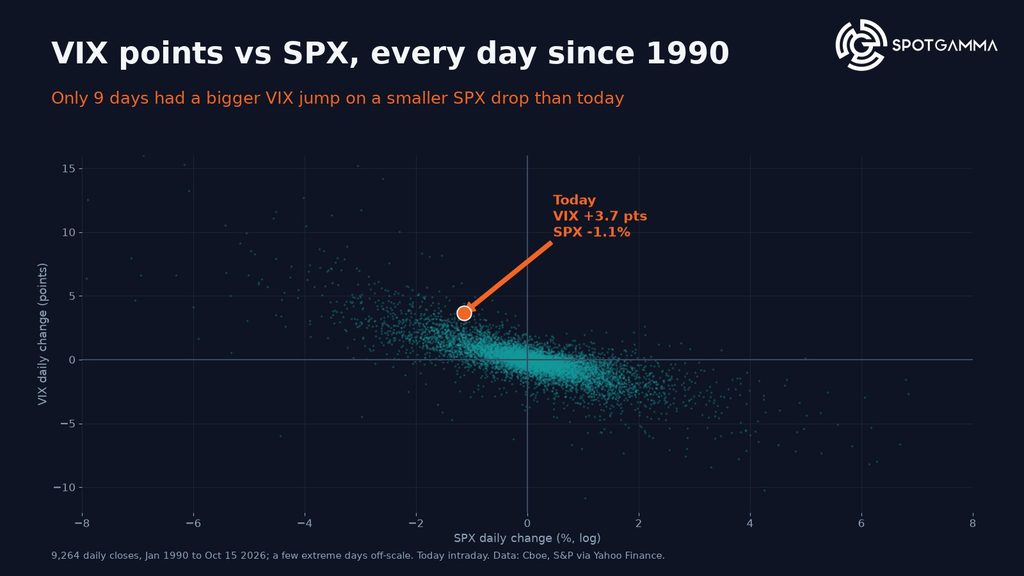
Why was the VIX Move So Outsized?
The size of the VIX move stands out in particular. The VIX is typically about five times as volatile as the SPX in percentage terms, yet Friday’s jump was roughly four times that rate. The VVIX — the implied volatility of VIX options themselves — spiked nearly 20% to 110.
This indicates traders paid up for VIX calls despite elevated skew and expensive premiums.
Last month, our daily pre-market reporting flagged unusual VIX call buying. This included nearly 300k in bought calls expiring November 18. Dealers on the other side of those trades were therefore short those calls.
Dealer hedging helps explain the outsized VIX move, as the short calls added fuel to the fire through a negative gamma feedback loop. As VIX moved higher, the delta of those calls increased, forcing dealers to buy more VIX futures to hedge their short call positions.
Beyond the size of the move, the rate of change was also surprising: VIX jumped from 16 to an intraday high of 22 (+40%) in just two hours on Friday. As implied vol rose dramatically, the long November calls performed exceptionally well: the VIX 31 calls expiring November 18 rose 80% in the session.
Put Buyers Load Up Ahead of Big Tech Earnings
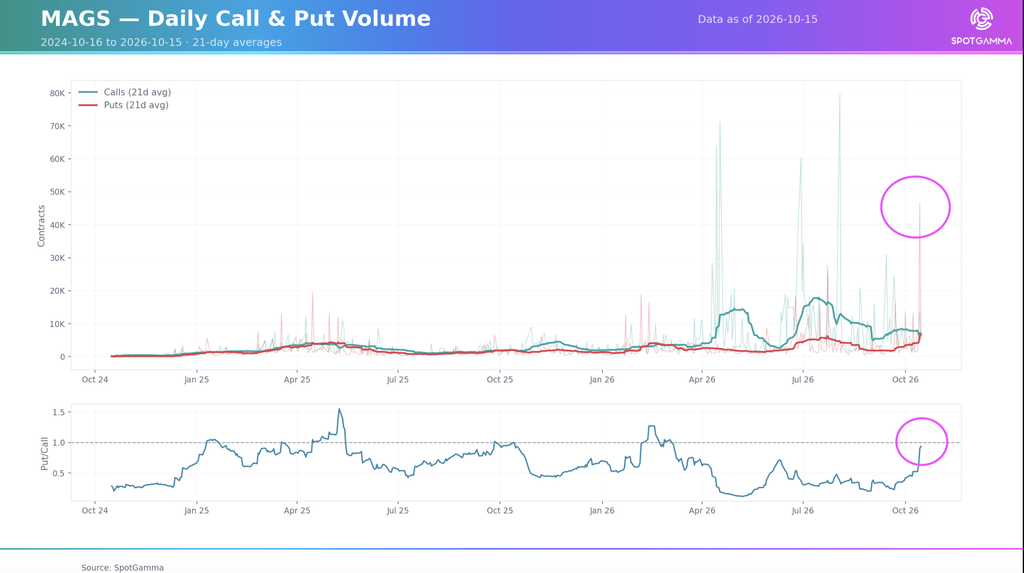
As the Nasdaq fell over 2% on Friday, hedging in the Magnificent 7 began to similarly pick up. MAGS, the Mag7 ETF, saw roughly 40K put contracts trade last week — the highest put volume in two years.
The put/call ratio for MAGS also rose to the highest level seen since the March drawdown.
Institutional trading reveals a cautious story ahead of this tech selloff. Just ten minutes before Friday’s close, roughly 110k QQQ October 30 $700 puts traded for an estimated $111 million in premium.
Flows of that size suggest that market participants with deep pockets are starting to add downside protection. This marks a stark reversal from the call-buying frenzy observed in recent months.
The timing points to earnings: TSLA and META report next week, with GOOGL, MSFT and AMZN the week after. Given the weighting of these stocks in the S&P 500, each earnings event carries an outsized influence on the market.
With earnings on deck and SPX in negative gamma territory, there is an expanded potential for larger market swings in either direction — including expanded intraday ranges. While traders appear to be bracing for downside at the moment, we will look to see how post-OPEX positioning re-establishes itself to determine whether the current volatility regime sticks or fades.