XLF: The Next Rate-Sensitive Setup
The S&P 500 once again flirts with all-time highs, proving that current headwinds can do little to sway bullish sentiment. The threat of rising rates continues on as one such headwinds, creating interesting trade opportunities along the way.
Last week, we highlighted an opportunity in the utilities sector (XLU) if yields cooled down — and the market didn’t make us wait long. In just one week, XLU rallied 5%, and the XLU October 41 calls we flagged more than doubled in value along the way.
With the probability of an October Fed rate hike falling below 20%, concerns about further near-term tightening appear to have eased. Against this backdrop, the focus then shifts to earnings results.
This week, we’re turning to a sector with another setup brewing in the financial sector. With earnings season kicking off soon for these stocks, options positioning in sector ETF XLF and its top holdings suggests meaningful opportunities to the upside.
Banks are traditionally rate-sensitive businesses, as rates shape loan demand and investment banking activity. Elevated rates have weighed on the group, and the financial sector (XLF) sits roughly 7% below its all-time high and has underperformed the broader market recently. The damage is even more pronounced under the hood: two of XLF’s top-10 holdings, JPMorgan and Goldman Sachs, have retreated 11% and 25% from their respective all-time highs.
Yet earnings could become the catalyst that reverses the sector’s downtrend. JPMorgan (JPM), Goldman Sachs (GS), Wells Fargo (WFC), and Citigroup (C) report Tuesday, October 13. Bank of America (BAC) and Morgan Stanley (MS) follow on Wednesday, October 14. With the probability of an October Fed rate hike now below 20%, the data suggests earnings results and options positioning will help set the tone into Q4 of 2026.
XLF Positioning: Hedged Below, Fuel Above
XLF’s Volatility Skew has shifted notably in the past few weeks. This curve shows implied volatility (IV) across strike prices, indicating how demand for options has shifted. Compared to one month ago (gray line), at-the-money (ATM) IV is lower while both put and call skew have steepened.
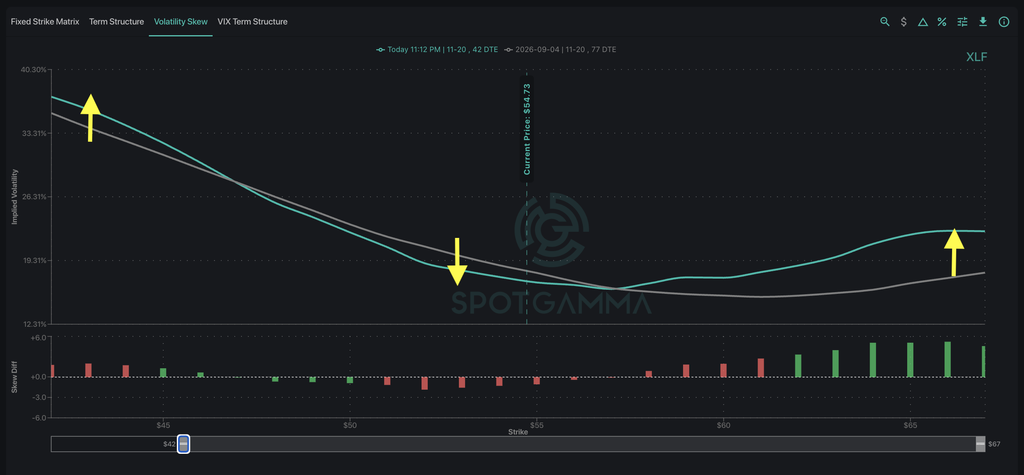
In plain terms, out-of-the-money options have become relatively more expensive. Traders appear to be paying up for protection and upside exposure into earnings.
Flows tell a similar story. Our Opening Setup report flagged two large XLF put purchases last week: 15,000 October $55 puts and 10,000 January 2027 $57 puts. Both were bought to open, meaning these were newly established positions. That type of size, especially in longer-dated expirations, suggests institutions are adding meaningful downside protection.
But here’s where the setup gets interesting for bulls. With XLF closing around $55 last Friday, SpotGamma’s Synthetic OI Model reveals concentrated negative gamma between $60 and $80.
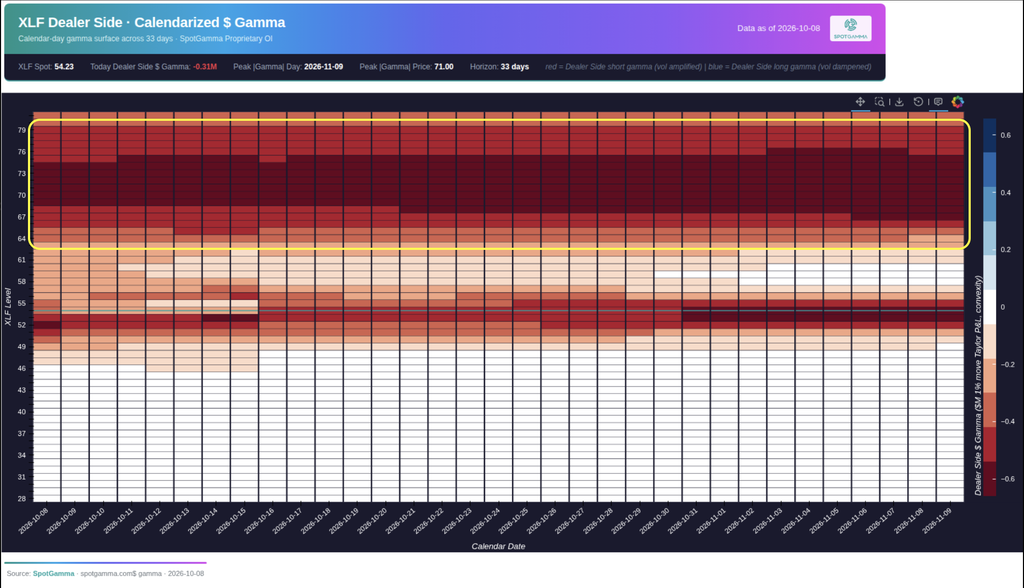
In other words, the positioning overhead differs significantly from positive gamma structures that can suppress volatility or contribute to price pinning. Instead, this landscape means upside momentum could accelerate quickly should XLF begin to rally.
If bank earnings meet or exceed expectations, dealer hedging could potentially become a tailwind for further upside as dealers hedge with price movement.
JPM in Focus: 98th-Percentile Call Skew Into Earnings
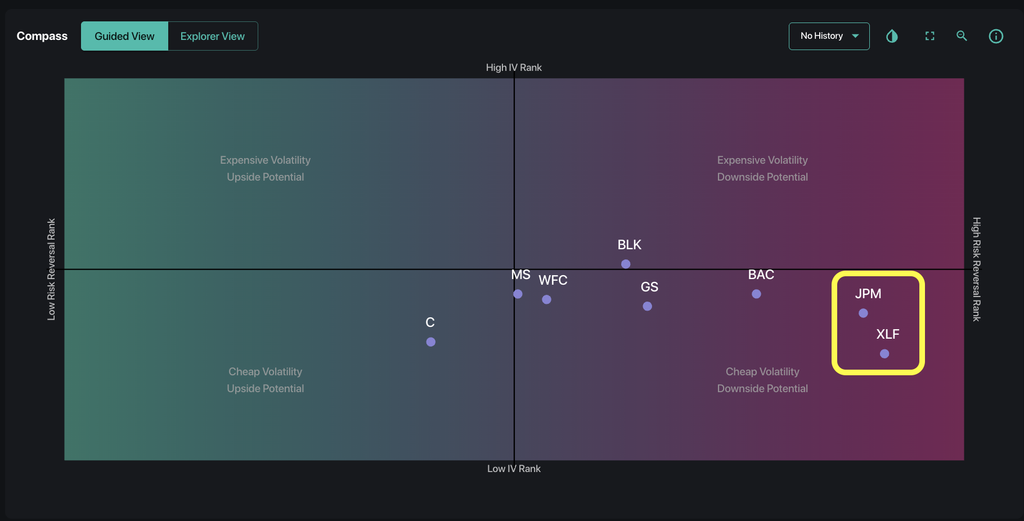
Among the big banks, JPMorgan, which accounts for approximately 12% of XLF’s holdings, stands out for its particularly bullish options positioning heading into earnings. JPM’s call skew currently ranks in the 98th percentile, indicating unusually strong demand for upside calls from traders.
The options market is pricing in an implied earnings move of approximately 3%. With JPM near $333, two SpotGamma levels frame the range. The Put Wall at $320 marks the strike where large put positioning can act as support. The Key Gamma Strike at $350 carries the largest total OI concentration.
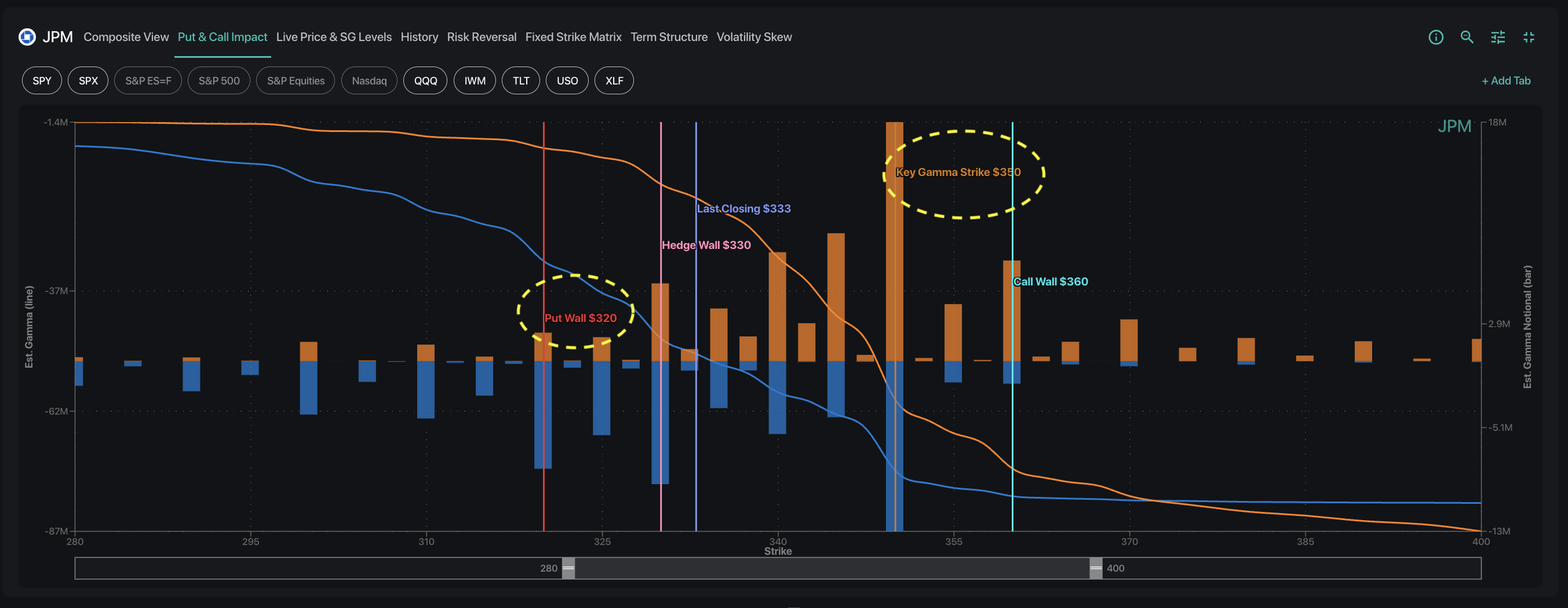
A strong report that lifts JPM toward $350 could set the tone for the sector and push XLF further toward the negative gamma zone overhead. These setups have the potential to deliver outsized moves across the sector.
We encourage traders to focus on options positioning ahead of these reports, using implied volatility and gamma exposure to identify tactical trade setups around these catalysts.