Will the Selloff Continue?
The market began to waver at the end of last week, with the S&P 500 down nearly 2% and Nasdaq dropping 3% from mid-week highs.
We noted a spike in MAGS put buying and a rising put/call ratio in our previous Sunday Newsletter as big tech earnings approached. Then, our October 19 pre-market Founder’s Note warned of market risk from both a dealer gamma and correlation perspective:
“For today, our concern is that there is not a lot of support from current indicated SPX levels (7,700) down to 7,600. The bigger picture is that if COR1M starts to creep higher with SPX <7,700, then we want to start positioning for a broader selloff.”
That risk materialized on Wednesday, as META and TSLA post-close earnings kicked off a market drop across both Mag7 and semiconductor stocks. SPX volatility jumped as sentiment flipped to risk-off.
The big question now is whether the market still has room to fall.
Options positioning suggests that this specific type of fragility can persist. SPX closed below our Risk Pivot, the level where dealer gamma flips negative. Below that level, dealer hedging tends to amplify moves in both directions.
Volatility data further confirms broader market stress. The VIX sits about 9 points above 1-month SPX realized volatility, compared to a normal gap of ~3.5. That difference indicates an elevated volatility risk premium: traders anticipate more risk than what has recently materialized.
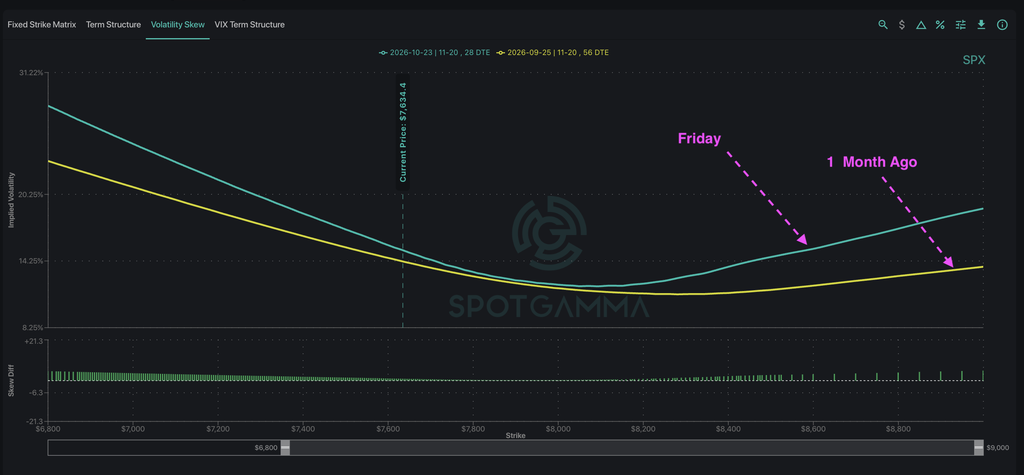
While traders may be bidding for crash protection, SPX call skew also appears lifted — meaning some participants seek upside exposure at the same time. This dynamic means it is critical to dive deeper into how traders are reacting, and what upcoming events should further shape the dynamic.
Dip Buyers Step Into the AI Unwind
With the market drop beginning Thursday, it’s important to ask how have major players reacted to the selloff thus far? This can inform us how traders with deep pockets see current market conditions.
One trader bought nearly 110K QQQ October 30 $700 puts for an estimated $111 million in premium two weeks prior. With QQQ dropping 3% on October 22nd, these puts were in fact closed for a 193% gain.
The index damage appears modest so far, with SPX only 3% below all-time highs while QQQ is down 7% from early October records. Yet the AI trade unwind has been much more violent beneath the surface: SOXX has dropped 21% in a month, and DRAM is down 29%. AI infrastructure stocks fared worse: NBIS (-39%), CRWV (-43%), and SKHY (-33%) have each dramatically fallen within one month.
However, single-stock flows tell a surprisingly constructive story. Put demand remains low, and the hardest-hit names now see notable call buying.
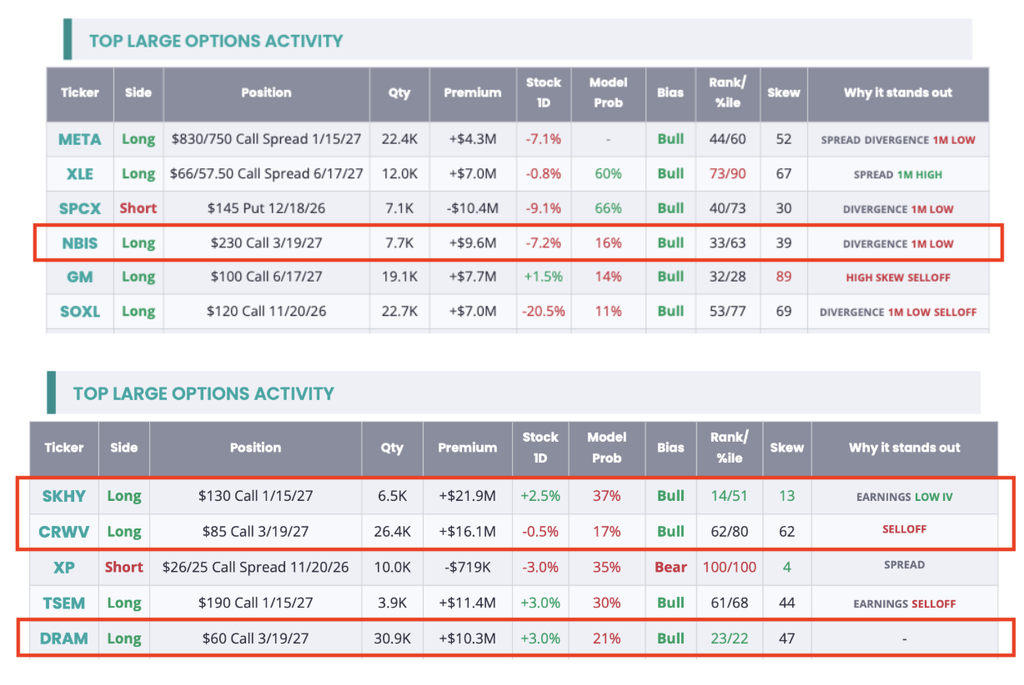
Our Opening Setup report highlights the most impactful trades from the prior day to isolate newly opened positions, filtering out day trading or volatility trading noise. In the last week it flagged multiple noteworthy trades:
- NBIS: 7.7k Mar 230 calls bought to open (10/22)
- SKHY: 6.5k Jan 130 calls bought to open (10/21)
- CRWV: 26k Mar 85 calls bought to open (10/21)
- DRAM: 31k Mar 60 Calls bought to open (10/21)
The structure of these trades is telling: traders are using defined-risk, longer-dated calls to position for a rebound.
As these new positions were opened while in the epicenter of the AI selloff, the buyers may see the market drop as a prime dip-buying opportunity.
A Loaded Week Ahead: FOMC and Earnings
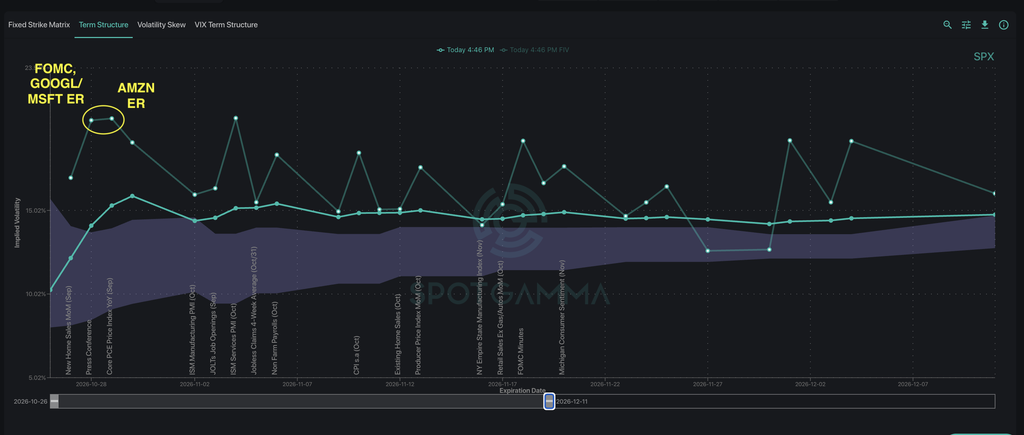
Looking ahead, the catalyst calendar is loaded. The FOMC decision along with GOOGL and MSFT earnings land on October 28, with PCE data and AMZN earnings both on October 29.
The SPX Term Structure shows current implied volatility (teal line) remains elevated relative to its 90-day range (shaded area). Meanwhile, Forward IV (faded teal line) shows a spike October 28-29, reflecting event risk from FOMC and mega-cap tech earnings.
Forward IV is approximately 20% compared with current IV of 14%, suggesting that the options market is pricing in heightened risk around both dates.
The market currently prices in a 90% probability that the Fed will hold interest rates steady at its next meeting. If the Fed delivers the expected hold and Mag7 earnings come in positive, the post-event decline in implied volatility could help fuel a relief rally.
The specific mechanism for a rally does matter. We encourage traders to watch whether options sellers return after October 29: if vol supply comes back, the selloff likely stalls as trader vol-selling reintroduces positive dealer gamma. Shoulder options sellers stay sidelined, the same mechanic that amplified last week’s decline remains active — leaving potential for significant movement in either direction.