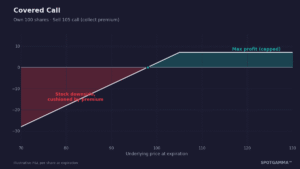
How covered calls work, what they really pay you for, and how dealer positioning data turns strike selection from guesswork into a process.
Market Analysis
Bear Put Spread: Defined-Risk Downside Exposure
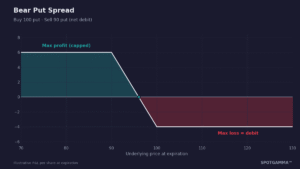
A practical guide to the bear put spread: when it beats a long put, the math at expiration, and how the Put Wall anchors the short strike.
Long Straddle: Trading a Big Move in Either Direction
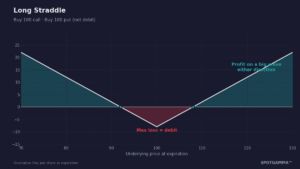
The long straddle buys a call and a put at the same strike to profit from a large move in either direction — here is how it works and when the odds favor it.
Long Strangle: A Cheaper Bet on a Big Move
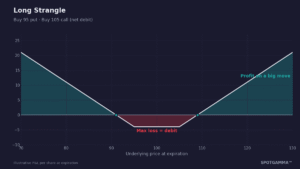
A long strangle buys an out-of-the-money put and call to bet on a big move at roughly half the cost of a straddle — the catch is the move has to be bigger.
Calendar Spreads: Trading Time Decay and Term Structure
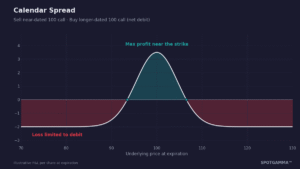
The calendar spread sells fast-decaying near-dated premium against slower-decaying longer-dated premium at the same strike, profiting when price pins near that strike.
Butterfly Spread: Precision Pinning Trades
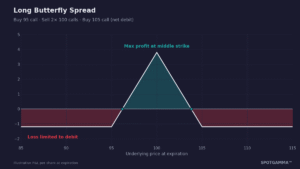
The long butterfly risks a small debit on price finishing at one exact strike — the market’s purest pin trade, and gamma data tells you which strike to pick.
Protective Puts: Insurance for a Stock Position
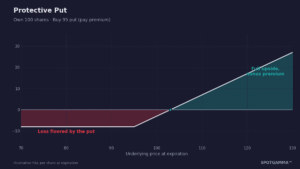
Buying a put against stock you own sets a hard floor under your losses while leaving the upside open — here is what that insurance costs and how to buy it well.
Vertical Spreads Explained: Bull, Bear, Debit, and Credit
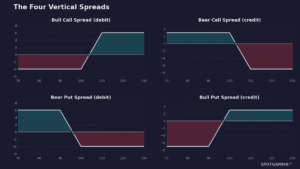
The four vertical spreads in one guide: debit vs credit mechanics, a worked 2×2 example set, and how wall levels anchor strike selection.
Bull Call Spread: A Defined-Risk Way to Trade Upside
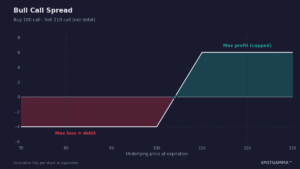
A practical guide to the bull call spread: when it beats a long call, how the math works, and how to pick the short strike with positioning data.
Bull Put Spread (Put Credit Spread): Income With Defined Risk
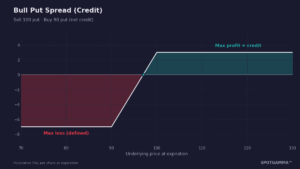
The put credit spread explained: what you are really being paid for, the math at expiration, and how the Put Wall anchors a level worth selling beneath.